ServicesUSDA Loans
USDA Loans in Manor, TX
A USDA loan lets you buy with no down payment if the property sits in an eligible area and your family income fits the limit. We check both before you get attached to a house, then show you what the loan costs at closing and over the years.
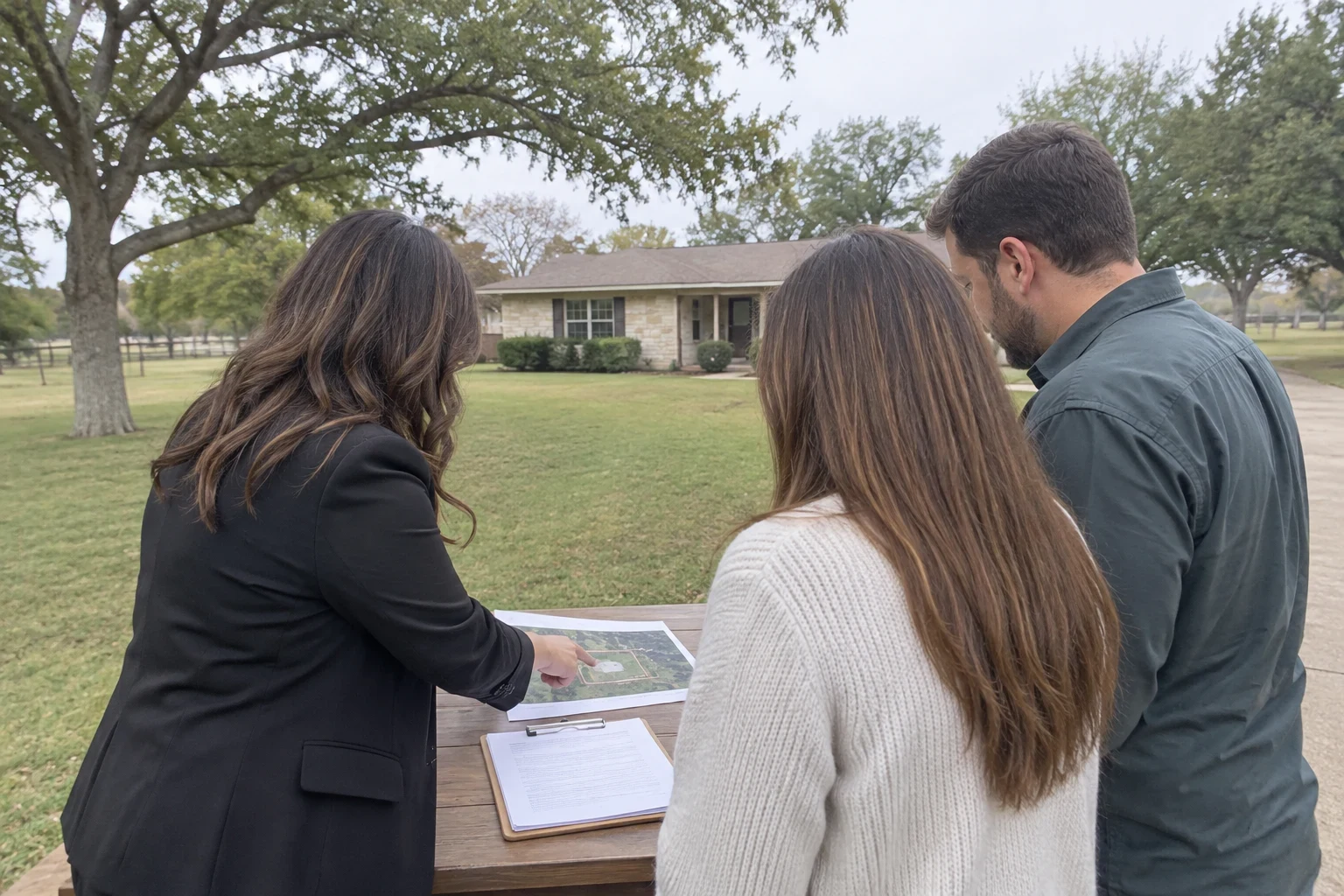
What a USDA loan is and who it fits
The USDA guaranteed loan is a 30-year fixed home loan backed by the U.S. Department of Agriculture. It is built for buyers with moderate incomes who want to live in a smaller town or on the edge of a metro. There is no down payment required, and the rate is often close to what FHA and conventional borrowers see.
Two things decide if it works for you. The property has to be inside a USDA eligible area, and the total income of every adult who will live there has to fall under the county limit. Some addresses around Manor, Elgin and Taylor qualify and some do not, and the maps get updated, so we look up the exact address every time.
Our loan officers have 11 years in the mortgage industry, and we have been NMLS licensed for 10 years. In that time we have learned that zero down is only half the story. The other half is the guarantee fee you pay every year, and we want you to see it next to your other options before you pick.

What we handle on a USDA loan
- 01
Address eligibility check
We run the property through the USDA eligibility map before you write an offer. If you are still shopping, we can check several addresses so you know which streets work.
- 02
Income limit review
USDA counts income from every adult who will live in the house, not just the people on the loan. We add it up the way the program does, including allowed deductions for children, childcare and elderly family members.
- 03
Side-by-side cost comparison
We put USDA next to FHA Loans and Conventional Loans on one page. You see the cash needed at closing, the monthly payment and how the mortgage insurance or guarantee fee behaves over ten and thirty years.
- 04
Pre-qualification and pre-approval
We start with pre-qualification so you know your price range. Then we verify income, assets and credit for a full pre-approval you can hand to a seller.
- 05
Closing cost planning
USDA lets you roll the upfront guarantee fee into the loan, and in some cases closing costs too if the appraisal comes in high enough. We tell you early which of these apply so the cash you bring to closing is not a guess.
Questions about USDA Loans?
Call(512) 956-7745Signs a USDA loan may be the right call
Savings are thin, income is steady
You have a reliable paycheck but not much set aside for a down payment. USDA removes that barrier if the rest lines up.
You like a house outside the city core
Many properties east and north of Austin sit in or near eligible areas. If the place you want is a bit farther out, it is worth checking.
Your income is moderate, not high
The program has a cap. If your family earns well above the area median, a conventional loan usually fits better.
You plan to stay a while
USDA is for a primary residence only, not a rental or second home. It makes the most sense when you expect to live there for years.
FHA felt expensive
If you priced FHA and the insurance looked high, compare it. The USDA annual fee is often lower, though it also lasts for the life of the loan.
How a USDA loan moves from first call to closing
- 1
First phone call
We ask about income, debts, who will live in the house and where you want to buy. By the end you know if USDA is a real option or if another loan fits better.
- 2
Documents and pre-approval
You send pay stubs, tax returns and bank statements. We verify everything and issue a pre-approval, usually after one more conversation by phone or video.
- 3
Offer, appraisal and underwriting
Once you are under contract, we order the appraisal. USDA appraisals check that the property is safe and sound, so we flag anything the seller may need to fix. Our underwriting team reviews the file first.
- 4
USDA review and closing
After our approval, the file goes to USDA for its own sign-off. That extra step adds time, so we plan the closing date around it and keep you and your agent updated until you sign.
What moves the cost of a USDA loan
Skipping the down payment does not make the loan free. You still pay an upfront guarantee fee, a yearly fee built into your payment, and normal closing costs. We lay all three out and show how they add up over the time you expect to keep the loan.
- Upfront guarantee fee
- This is a one-time fee set by USDA as a share of the loan amount. Most borrowers roll it into the loan, which means you pay interest on it for years.
- Annual fee for the life of the loan
- Unlike private mortgage insurance on a conventional loan, the USDA annual fee does not drop off. The only way out is to refinance later, which has its own costs.
- Credit and debt load
- Your credit score and debt-to-income ratio shape your rate and whether the file gets an automated approval or a manual review.
- Appraisal findings
- If the appraisal calls for fixes before closing, that can change the timeline and who pays for what. A clean report keeps costs where we estimated.
- Seller credits and timing
- A seller can cover part of your closing costs. Your rate lock length also matters, since USDA's extra review step can call for a longer lock.
USDA loan questions we hear most
Do I have to buy a farm or live way out in the country?
No. USDA eligible areas include plenty of small towns and suburban edges, not just farmland. The property only needs to be inside the eligible boundary. We check the exact address for you.
Whose income counts toward the limit?
Every adult who will live in the house counts, even if they are not on the loan. A working adult child or a parent who moves in can push the total over. We go through this on the first call so there are no surprises in underwriting.
Is USDA cheaper than FHA?
Often the monthly cost is lower, because the USDA annual fee tends to be smaller than FHA mortgage insurance. Both can last for the life of the loan. If you have some savings and strong credit, a conventional loan may cost less over time because its insurance can be removed. We run all three so you can see the numbers.
Can I use a USDA loan for an investment property?
No. USDA is only for a primary residence you will live in. If you are buying a rental or a flip, look at our Hard Money Loans or Conventional Loans pages instead.
How long does a USDA loan take to close?
It usually takes a little longer than other loans because USDA reviews the file after we approve it. We set the closing date with that step in mind and tell you early if anything might slow it down.
Find out if the house you want qualifies
Give us the address and a rough idea of your income. We will check eligibility, compare USDA with your other options and help you start the application.